







One small spark
of kindness
A Hanukkah teaching from Interim Head of School Rabbi Dennis Eisner
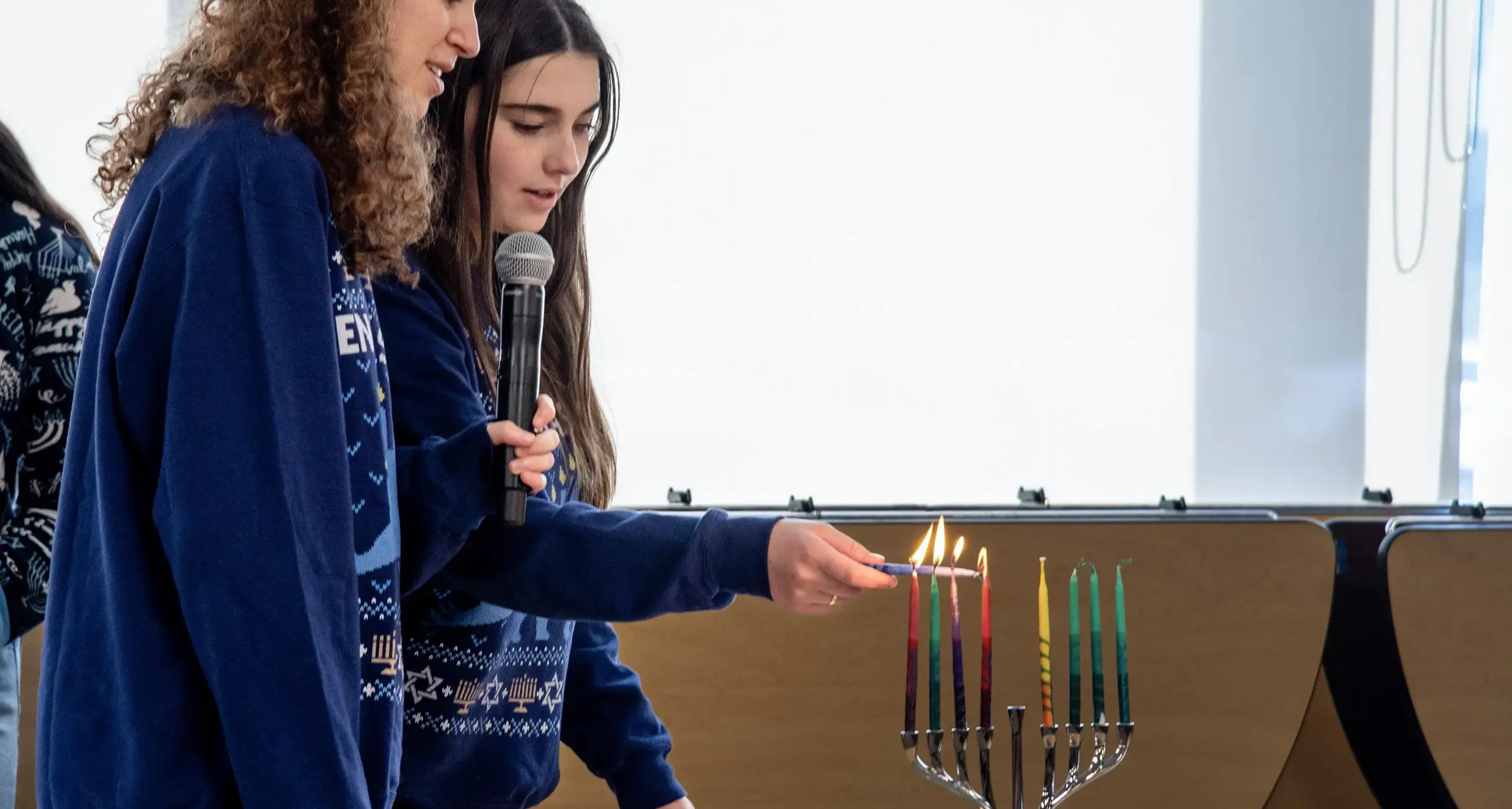
As the days shorten and we gather to light the hanukkiah (Hebrew for “Hanukkah menorah”), Jewish tradition usually turns toward the familiar tales of old, like the story of the Maccabees or the miracle of the oil that lasted for eight days. Yet there is another Hanukkah story, a far more recent one, that carries a spark speaking directly to the soul of our kehillah (Hebrew for “community”) today.
In December 1993, in Billings, Montana, a 5-year-old boy named Isaac Schnitzer placed a menorah in his bedroom window, just as Jewish children have done for generations to share the light of the holiday with the world. On the night of December 2, someone threw a brick through that window, scattering glass across his bed. Thankfully, Isaac was not hurt. But the message was unmistakable: hide who you are.
The Schnitzer family was advised to take their menorah down. Instead, Isaac’s mother, Tammie, asked her neighbors to put more menorahs up. And they did.
The local newspaper, the Billings Gazette, printed a full-page paper menorah for readers to cut out and display. In a city with only about 50 Jewish families, an estimated 10,000 menorahs soon appeared in the windows of homes, churches, and storefronts. Some of those windows were smashed too. People kept their menorahs up anyway. One of the very first to respond was one of Isaac’s young friends, who showed up the next morning with a paper menorah and a roll of tape and carefully hung it in Isaac’s window herself.
“Not in our town,” read signs across Billings.
What strikes me most about the Billings story isn’t just the bravery of one family. It’s how an entire community understood arevut (Hebrew for “mutual responsibility”). They teach us that belonging to a kehillah is never a passive state. It is an active calling. Repairing our world takes human hands, and even when the darkness feels overwhelming, not one of us is powerless.
Our students especially can take this to heart. In our world, we often mistake heroism for grand, dramatic gestures. But the Torah (the first five books of the Hebrew Bible) teaches that we find holiness in the everyday. The people of Billings did not save their neighbors with speeches; they did it with a sheet of newspaper and a piece of tape. True courage is speaking up when a classmate is mistreated. It is extending a hand to someone sitting alone at lunch. It is having the humility to admit a mistake, or the strength to pursue tzedek (Hebrew for “justice”) even when it is uncomfortable.
Billings reminds us that leadership does not require a title, a throne, or the loudest voice in the room. It requires empathy for the needs of others. And often, one person’s quiet act of conviction gives an entire community permission to be brave. A mother who refused to hide, and a little girl with a roll of tape, gave a whole city that permission.
Perhaps the most beautiful part of the Billings story is that most of the people who hung those menorahs were not Jewish. Neighbors of every faith and background chose to stand in the light together.
Whether you’re lighting candles for Hanukkah, decorating a Christmas tree, gathering around the kinara (Swahili for “candleholder”) for Kwanzaa, or simply counting down to longer days, the light shines brightest when we step forward into the dark, together.
As we kindle the hanukkiah for eight nights, we watch the light grow. The windows of Billings can inspire us to illuminate our own kehillah. We don’t have to be a biblical figure or a name in the history books to make our small corner of the world shine bright. We only need the willingness to see the need, and the courage to step forward.
So, I ask you this: What is one small spark of kindness or courage you can share this week to brighten someone else’s dark day?
May this season bring warmth, hope, and blessing to your homes. May we all find the strength to be the light our world so dearly needs.
With warmth and blessings,
Rabbi Dennis Eisner
Interim Head of School